Monday, May 30, 2011

Top 10 Fuel-Efficient Luxury Cars

Luxury cars are often not the fuel. Even if some do not - Hey, Range Rover - There are many who will receive gas mileage, which is as good as or better than your mainstream family sedan. From an initial list of luxury cars that get better than 25 mpg on the highway, through our 10 favorites. Please note that data on fuel economy in the best estimates of the model of engine, transmission and transmission choices can lead to lower estimates of EPA.

10. 2010 Volvo C30

With the C30, Volvo hoped to follow the success of the Mini Cooper with its own near-luxury compact car that delivers a sporty driving feel. The C30's interior is a study in Swedish simplicity, with materials that are better than you'd expect in a $24,100 car. Its hatchback design offers more style than the norm, too, so you'll look good while getting good mileage.

9. 2010 Audi A3 TDI

The A3 feels a bit down-market for Audi, but the TDI's turbo-diesel four-cylinder makes up for that with the sort of power that could pass for any luxury car. This thing moves out swiftly, and it gets an astonishing 30/42 mpg city/highway. Judging by our observed mileage in other TDI cars, there's a good chance you'll exceed those figures. Diesel exhaust is hardly the smelly affair it was years ago — nor is diesel fuel as pricey as it was months ago. On both counts, the A3 TDI stands to benefit.

8. 2010 Lexus ES 350

The Lexus ES has been a popular entry-level luxury sedan for years. In addition to thrifty fuel use for its size, the ES' cabin refinement is impressive, which helps explain why this car still sells well despite tough competition. Copious rear legroom, a sizable trunk and a comfortable ride all add up to a car that's viewed as a benchmark in its class.

7. 2010 Acura TSX


Acura has always offered luxury cars for a comparatively affordable price, and the TSX delivers a lot for less than $30,000. While it isn't a sport-sedan star or a cushy cruiser, it offers a respectable combination of both genres. The standard four-cylinder engine sips fuel and doesn't feel underpowered, either. Acura's new design language isn't universally liked, but on the TSX it's relatively subdued, making it more appealing to the masses.

6. 2010 Lexus RX 450h

We know that not every luxury shopper searching for fuel efficiency wants a sedan, which leads us to the Lexus RX 450h luxury hybrid crossover. Redesigned for 2010, the RX 450h notched significant fuel economy gains over its predecessor, the RX 400h, which was rated at 27/24 mpg for the front-wheel-drive model. What's more, the RX 450h doesn't give up anything in terms of luxury or comfort compared to its gas-only sibling, the RX 350.

5. 2010 Cadillac CTS

Passengers will be impressed by the CTS' hand-stitched dashboard and rising-screen navigation system, and they'd probably be surprised to know you can get highway mileage in the high 20s. The car has all the other credentials of a bona fide sport sedan: true rear-wheel-drive handling — so you get the sensation of being pushed forward, not pulled — plus precise steering, responsive V-6 drivetrains and strong brakes. It's easily GM's worthiest luxury sedan in years.

4. 2010 Lexus HS 250h

To date, mileage advantages among luxury hybrids have ranged from insignificant to ... respectable. The Lexus HS 250h is the first luxury hybrid to come close to the high bar set by nonluxury hybrids like the Toyota Prius. Like other Lexus models, the HS isn't as quick or sporty as some luxury sedans, but it has the qualities Lexus buyers have come to expect.

3. 2010 Hyundai Genesis


The Hyundai Genesis sedan won our Cars.com New Car of the Year Award for 2009, so you can imagine how highly we think of it overall. One of the many reasons is its excellent gas mileage with no acceleration penalty. If 18/27 mpg doesn't sound impressive, check out comparable full-size luxury sedans. Even the V-8 model's 17/25 mpg puts most to shame. Hyundai's not a fancy brand, but the Genesis is a fancy car that shows you can have it all.

2. 2010 Audi A4


The A4 combines an elegant cabin with surprisingly ample power from its turbocharged four-cylinder — plus an EPA rating of 23/30 mpg with front-wheel drive and an automatic transmission or 22/30 mpg with Quattro all-wheel drive and a manual. One caveat: Get a Quattro automatic, as many buyers do, and mileage drops to a less enthralling 21/27 mpg. That's more in the neighborhood of two-wheel-drive competitors, though, and given the A4 Quattro's all-weather capabilities, it's still pretty impressive.

1. 2009 BMW 335d
To those who say they'd never buy a diesel-powered luxury car, I say drive the BMW 335d and then get back to us. It's a diesel car unlike any you've probably experienced, what with its abundant low-end torque, quiet operation and cleaned-up emissions. Plus, the 335d retains all of the winning ride and handling characteristics of the gas-powered 3 Series. There are other luxury cars with higher fuel economy estimates, but the 335d represents the best combination of efficiency and driving enjoyment.
Get paid To Promote at any Location

Top 10 Most Memorable Movie Cars

When we decided to list the Top 10 Movie Cars last summer, we had no idea our readers would be so passionate about their favorite movies, and the automotive industry they are characters. When the "Transformers" arrives, we will re-list, listening to reader feedback last year, because - once again - that he deserved to make the top 10 cars Some cars were able to keep their seats, while others are mixed around to make room for more deserving contenders. When "Speed ​​Racer" next year, expect another round of contention.

No. 10: 2003 Mini Cooper S, "The Italian Job"

Drivetrain: 163-hp, supercharged 1.6-liter four-cylinder engine with six-speed manual transmission; front-wheel drive
Notable Features: 200 pounds lighter than stock Cooper S; painted red, white or blue

Larger cars would have rubbed fenders with light poles and tunnel walls, but thanks to a nimble fleet of Mini Coopers, a band of conspirators manages to escape captors down congested streets, parks and subway tunnels. (Parks? Mass transit? In Los Angeles?) Computer-rigged signals aid the getaway, stopping cross traffic at red lights. Sounds like California dreaming for drivers.

No. 9: 1959 Cadillac Ambulance, "Ghostbusters"

Drivetrain: 325-hp, 6.4-liter V-8; rear-wheel drive
Notable Features: Tailfins, flashing lights, sirens, attached ladder

Though it plays a relatively small part in its film, the Ectomobile is the finest medical movie car to date. What it lacks in brute force it makes up in style, with red tailfins, strobe lights and more roof gear than a fire truck. Should there ever be a remake, our pick for the new Ectomobile would be the Dodge Magnum. Right, Egon?

No. 8: 1974 Dodge Monaco, "The Blues Brothers"

Drivetrain: 275-hp, 7.1-liter V-8 with three-speed automatic transmission; rear-wheel drive
Notable Features: Cop motor, cop tires, cop suspension, cop shocks

You usually don't come out ahead when swapping a Caddy for a Dodge — unless the Dodge has a 440-cubic-inch V-8. The Bluesmobile would be our pick if we had to outrun the better half of Illinois police, not to mention a neo-Nazi outfit and a country-and-western band. The car totally falls apart in the end, but you'd be hard-pressed to find a vehicle that could do better on "a mission from God."

No. 7: 1932 Ford coupe, "American Graffiti"

Drivetrain: 60-hp, 3.6-liter V-8 with three-speed manual transmission
Notable Features: Bright yellow paint job bound to be noticed by bored teens in Modesto, Calif.

Nicknamed the "Deuce," this five-window '32 Ford coupe is the quintessential American hot rod. As built, it came with the engine mentioned above, but in the movie, it's clear the coupe has been souped up. It was the car's awesome growl and the cool drag race at the end of the movie that lodged this hot rod into the hearts of American teens for a decade.

No. 6: 1976 AMC Pacer, "Wayne's World"

Drivetrain: 100-hp inline-six with three-speed automatic transmission; rear-wheel drive
Notable Features: Flame decal, licorice dispenser, "Bohemian Rhapsody" on continuous playback

Although this movie may not have driven thousands of people to track down a baby blue Mirth Mobile of their own, it did inspire a number of in-car, head-banging singalongs by fans of the film.

No. 5: 1968 Ford Mustang GT 390, "Bullitt"

Drivetrain: 325-hp, 6.4-liter V-8 with four-speed manual transmission; rear-wheel drive
Notable Features: Fastback roof, higher engine note than the Charger

Never mind the continuity mishaps; just tell yourself there were a lot of green Volkswagen Beetles in San Francisco that day. The seven-minute chase scene between Frank Bullitt's Mustang GT 390 and a hit man's 1968 Dodge Charger is among the best of its kind. Voters gave Bullitt's car the edge because, in the end, you have to root for the good guy.

No. 4: 1964 Aston Martin DB5, "Goldfinger"

Drivetrain: 282-hp, 4.0-liter six-cylinder with four-speed manual transmission; rear-wheel drive
Notable Features: Bulletproof glass, machine guns, incessantly beeping radar screen

Save for the anemic BMW Z3 1.9 in "GoldenEye," Bond cars are top-notch — the list includes Aston Martins, Bentleys and Lotuses — but voters agreed the champ is the Aston Martin DB5 in "Goldfinger." Not only is it gorgeous, it outruns and out-gadgets all of its competitors. Plus it gets plenty of screen time with the best Bond, Sean Connery. Any dissenters, of course, are welcome to ride in the "power" passenger seat.

No. 3: 1961 Ferrari 250 GT, "Ferris Bueller's Day Off"

Drivetrain: 280-hp, 3.0-liter V-12 with four-speed manual transmission; rear-wheel drive
Notable Features: Cherry-red exterior, wire grille, Cameron-sized tonneau compartment

This movie is probably responsible for thousands of teens cutting class to joyride in their father's car. Of course, none hold a candle to Mr. Frye's convertible Ferrari. It won votes for all the obvious reasons: It's red, Italian and bloody fast. If our fathers owned something like this, we'd ditch Econ 101 in a heartbeat to take a spin — especially if Dad didn't lock the garage. (And yes, we know this was a kit car.)

No. 2: 1977 Pontiac Trans Am, "Smokey and the Bandit"

Drivetrain: 200-hp, 6.6-liter V-8 with three-speed automatic
Notable Features: T-top, CB radio, runaway bride in the passenger seat

The mission seemed simple enough: Get a truckload of bootleg beer from Texarkana, Texas, to Atlanta while Bo "Bandit" Darville runs interference in his Trans Am. The combination of the comical car chases and Burt Reynolds' mustache sold more than a few black and gold versions of Bandit's car.

No. 1: 1981 DeLorean DMC-12, "Back to the Future"

Drivetrain: 1.21-gigawatt nuclear/electric hybrid with five-speed manual transmission; rear-wheel drive
Notable Features: Gull-wing doors, 16-port twin exhaust boxes, flux capacitor

This was an overwhelming choice for voters, and why not? Doc Brown's smoke-spewing DeLorean achieves time travel at 88 mph thanks to a plutonium-powered nuclear reactor and onboard flux capacitor. By the end of the first movie, it runs solely on trash — and it can fly. That's still futuristic two decades after the movie debuted. Sure, the ignition seems to have some reliability issues, but this car easily won our hearts.

Honorable Mentions:
  • 1958 Plymouth Fury, "Christine"
  • 1973 Ford Falcon, "The Road Warrior"
  • 1975 Lotus Esprit, "The Spy Who Loved Me"


Get paid To Promote at any Location

Thursday, May 12, 2011

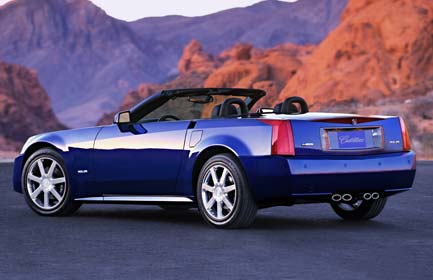
Cadillac XLR Review

Yet another entry from Cadillac to show the world it's serious about competing with the top European and Japanese luxury brands, the two-seat Cadillac XLR roadster is the company's flagship vehicle. Though it shares the same platform as the current Corvette, the XLR variant is not a simple case of corporate badge engineering. It's more of a grand touring machine than a hard-edged sports car, as the Caddy's responses are softer and comfortably refined. It also uses a more subdued 4.6-liter, 320-horsepower V8 engine rather than the Vette's edgier 6.0-liter, 400-hp V8 power plant.


2008 Cadillac XLR Convertible

The use of lightweight components like aluminum suspension pieces and composite body panels keeps the Cadillac XLR from being a bloated luxury two-seater. In addition, the standard Magnetic Ride Control adaptive suspension system automatically firms up or softens the suspension based on driving conditions, ensuring generally smooth and responsive maneuvers. The combination of bold, angular styling outside and distinctive eucalyptus-wood cockpit accents gives the XLR a sophisticated presence. Further, the XLR's power retractable hardtop roof allows the comfort and security of a coupe when the top is raised.

As impressive as it is, the Cadillac XLR roadster is not quite the "standard of the world" just yet. Though its styling and Cadillac badge will appeal to those looking to roll up to the valet in something different from the status quo, the XLR comes up short in terms of maximum performance and interior detailing when compared to its German rivals. But if those qualities aren't your top priority, and you're not overly impressed with the rest of the XLR's competition, this Cadillac convertible is worth considering.


Current Cadillac XLR

The Cadillac XLR is a two-seat luxury roadster featuring a retractable hardtop roof. The standard XLR comes with just about all of the luxury features you'd expect, including 18-inch alloy wheels with run-flat tires, adaptive xenon HID headlights, heated leather seats with plenty of power adjustments, dual-zone automatic climate control, keyless startup, a head-up display, a navigation system and a Bose audio system with satellite radio and a CD changer. There are also a couple special variants, the Passion Red Limited Edition XLR and the Platinum Edition XLR, that feature unique exterior paint and other minor trim enhancements.

A refined yet muscular 4.6-liter V8 powers the XLR, and a six-speed automanual transmission transmits the Northstar V8's 320 horsepower and 310 pound-feet of torque to the rear wheels. We've found the XLR to be a spirited performer, with 0-60-mph sprints taking less than 6 seconds and high-speed cruising that's generally hushed and effortless. Full-throttle shifts result in little hesitation, and the sound of the engine at speed is as good as or better than any V8 in its class. Antilock disc brakes are standard safety items, as are run-flat tires, a tire-pressure monitor, stability control, head/torso side-impact airbags and rear parking sensors.

Inside, the Cadillac XLR boasts an upscale cabin complete with rich eucalyptus wood trim and aluminum accents in addition to comfortable leather seating -- altogether clean-looking, modern and warm. State-of-the-art technologies abound, too: A head-up display shows vital information such as speed, fuel level and audio status on the windshield, adaptive cruise control automatically maintains a preset distance between the XLR and the car in front, and a large touchscreen mounted high in the center stack helps keep the dash free of numerous single-use buttons. Our editors found fit and finish to be excellent, save for a few pieces of metallic trim that seem tacked-on rather than cleanly integrated.


As fast as the XLR is when pushed, those expecting a true Cadillac sports car will be disappointed. Acceleration, though certainly quick, is not as forceful as its corporate cousin, and the XLR's softer suspension tuning results in noticeable body roll during hard cornering and plenty of nosedive under heavy braking. Even with its adaptive suspension's split-second response, the Cadillac XLR still feels less willing to tackle turns than the more athletic European contenders. On the open highway, the roadster hits its stride, delivering an undisturbed ride with effortless tracking.

Saturday, April 30, 2011

CTS SPORT WAGON

Amidst the beauty and history of the Concours d'Elegance in Pebble Beach, Cadillac treats car enthusiasts to a world premiere of its latest model of car production. The 2010 Cadillac CTS Sport Wagon makes its debut on the Monterey Peninsula, showing a dramatic design that elevates and updates the classic wagon body style.

Not unlike many historic Cadillac designs, the new Cadillac CTS Sport Wagon is a unique presence and dynamic. The car cut back inextricably applicant profile avant-garde design of the old utilitarian world of wagons. Cadillac car ahead offers great interior space and includes a series of choices of six-cylinder engines, making it a compelling alternative to more commercial vehicles.

Based on the hot-selling Cadillac CTS Sport Sedan, and a sister vehicle Cadillac CTS Coupe Concept, the Sport Wagon to extend the design-driven renaissance of Cadillac. This special evening at Pebble Beach, Cadillac CTS Sport Wagon moves to the global auto show circuit in the fall - and into Cadillac dealerships in spring 2009.

"In addition, this dramatically designed Sport Wagon is well synchronized with today's changing consumer tastes alternative, valid for SUVs or other larger vehicles," says Jim Taylor, Cadillac general. "This is an important step in Cadillac continues to grow worldwide, and of course in international markets like Europe, wagons have been and are still very significant."

Striking profile is created for the Cadillac CTS wagon, with a silhouette that refers to the speed and aerodynamic efficiency. It rides on the same 113.4-inch (2,880 mm) pitch Cadillac CTS sport sedan and 0.3 inches (7 mm) shorter. However, it offers a generous luggage compartment is 25 cubic feet (720 liters) behind the rear seats. Design highlights:

- Signature V-shaped deck and tailgate theme

- Large vertical taillamps with light-pipe technology

- Liftgate opening (through keychain or vehicle button)

- CHMSL integrated in subtle roof spoiler

- Integrated roof load management system with cross bars for a consistent look

- Management System with the cargo floor in the adjustable closure

New 19-inch wheels -

- Expand panoramic rear sunroof

Cadillac CTS Sport Wagon, like its predecessor sedan, includes available features such as four-wheel drive, a 40-gigabyte internal hard drive, navigation screen pop-ups and a hand cut and sewn interior with wood accents Sapelli.

"CTS Sport Wagon is an extension of the mounting Cadillac important in the world," said Taylor.

Design details

Dramatic planes highlight the Cadillac CTS wagon's design, including a V-shaped motif carried throughout the vehicle and carefully integrated intersections of exterior surfaces. The elements coalesce in a dramatic fashion, creating tension that emphasizes the vehicle's performance.

"It's a taut design that not only suggests sleekness, but delivers it," said Clay Dean, global design director for Cadillac. "Indeed, the drama of the sedan is amplified in the Cadillac CTS Sport Wagon, as the centerline cue that is part of the exterior and interior is more prominent and plays a stronger role in defining the design at the rear of the vehicle."

The emotion of the Cadillac CTS Sport Wagon's design is carried by a number of nuanced details. The liftgate area, for example, is a confluence of angles and planes that typifies the vehicle's design tension. Cadillac's "V" motif is most prominent here, culminating in a spine at the center of the liftgate that is accented with a subtle spoiler at the top of the backlight. The rear quarter panels extend slightly beyond the inward-angled planes of the V, creating a distinctive W shape at the rear of the vehicle. Large, prominent vertical taillamps - with Cadillac's signature light pipe technology - are the final, dramatic touches to the rear-end styling.

"The more you study the rear of the CTS Sport Wagon, the more you see," said Dean. "Functionality was certainly a guiding factor during development, but so was the idea to inject emotion into the normally sedate wagon category."

One of the more interesting integrations of form and function is found in the seamless roof load management system. Rather than stylized stanchions, brackets and cross bars that protrude above the roof line, the Cadillac CTS Sport Wagon's system blends with the roofline, maintaining an uninterrupted appearance. The center section of the roof panel angles downward inside the roof edges, allowing an unobtrusive placement of the cross bars - and creating a subtle fin effect at the trailing edges of the rear panels.

"They're not fins in the classic sense, but they work to help disguise the cargo load system and, yes, they acknowledge Cadillac's design heritage," said Dean.

The interior of the Sport Wagon is common with the much-acclaimed sport sedan, including streamlined instrumentation, LED lighting and hand-cut-and-sewn accents with French stitching.

Powertrains

Direct injection technology helps the Cadillac CTS offer more power while maintaining fuel economy and lowering emissions. It delivers fuel more precisely to increase the efficiency of combustion. This means less fuel is consumed and lower emissions created.

With the Cadillac CTS Sport Wagon's 3.6L V-6, direct injection translates to 304 horsepower (227 kW)*, no loss of fuel efficiency and a 25-percent drop in cold-start hydrocarbon emissions. It also runs on less expensive regular unleaded gasoline. The Sport Wagon's fuel economy is expected to be similar to the peak rating of the existing sport sedan's 26 mpg highway rating. The standard 3.6L VVT engine that produces 263 horsepower (196 kW) and 253 lb.-ft. of torque (343 Nm) serves as the base engine in North America.

Just like the Cadillac CTS sport sedan, the V-6 engines are matched with fuel-saving six-speed transmissions, including an Aisin six-speed manual or an electronically controlled Hydra-Matic 6L50 six-speed automatic. As is the case on the sport sedan, Cadillac CTS Sport Wagon includes AWD as an option.

An efficient 2.9L turbo-diesel engine is being developed for Cadillac CTS models primarily in European and Asian markets. It is a compact, dual overhead cam, four-valve V-6 engine from GM's family of diesel engines that delivers optimal fuel economy as well as reduced emissions and noise. The engine is rated at 184 kW (250 hp).

Driving dynamics

The robust and dynamic CTS chassis infuses the new wagon with a great balance of performance and luxury. It uses an independent short/long arm ( SLA) front suspension system and a multi-link rear suspension.

The multi-link rear suspension features a fully isolated subframe that helps deliver excellent suspension kinematics, contributing to a superior ride and excellent handling.

Advanced chassis technology in the form of Cadillac's StabiliTrak electronic chassis control system integrates the car's standard four-channel ABS with the full-function traction control, hydraulic brake assist and engine drag control systems to deliver a safer, more confident driving experience. Additional chassis details include a structure-enhancing tower-to-tower brace under the hood; large, four-wheel disc brakes and premium steering.

Cadillac CTS Sport Wagon Preliminary Specifications

Vehicle type: four-door, five-passenger rear-wheel-drive/all-wheel-drive wagon
Wheelbase: 113.4" / 2880mm
Length: 191.3" / 4859 mm
Width: 72.6" / 1842 mm
Height: 59.1" / 1502 mm
Track: 61.8" / 1570 mm (front); 62" / 1575 mm (rear)
Engines: 3.6L VVT V-6 (263 hp / 196 kW) 3.6L V-6 VVT DI (304 hp / 227 kW)
Transmissions: Aisin six-speed manual or Hydra-Matic 6L50 six-speed automatic
Suspension: four-wheel independent: MacPherson strut front; multilink rear, progressive rate coil springs, monotube shock absorbers
Steering: variable-assist rack-and-pinion
Brakes: four-wheel disc; aluminum or iron dual-piston front calipers; aluminum or iron single-piston rear calipers
Wheels: 17-inch, 18-inch or 19-inch aluminum
EPA luggage capacity: 25 cu ft / 720 l (behind rear seats)
EPA total volume: 121.9 cu ft / 3452 l

2010 CADILLAC SRX Crossover

Pebble Beach, Calif. - Today Cadillac provided a preview of the next-generation SRX Crossover, a 2010 model to be launched worldwide in all-new SRX mid-2009.The aims to provide a better alternative in the heart dynamics the luxury crossover segment, with a new iteration of Cadillac's signature design language.

"The next-generation SRX is the result of continued exploration and refining of Cadillac design language, with the goal of creating dramatic presence in the luxury crossover space," said Clay Dean, Cadillac design director.

Completely new SRX debuts at major global car looks like this year, when full information is published. 2010 model will replace the current SRX Crossover, which launched in 2004 a fundamental part of Cadillac's product renaissance and global expansion in progress. This new-generation crossover is similar to the style and proportion to Cadillac's Provoq Concept that appeared in many auto shows in 2008.

Completely new production model has been developed to achieve excellent driving dynamics and wet traction, elegant, modern cockpit has been designed to accommodate five passengers and ample cargo.

"The next-generation SRX, with the new CTS Sport Wagon, showcases Cadillac taking its dramatic design into new directions, particularly cars and crossovers that are the right size at the right time for today's luxury consumers "said Jim Taylor, Cadillac General Manager.

An American Tradition Continues

WASHINGTON - While Americans celebrate the inauguration of a new U.S. president next week, another new Cadillac through Pennsylvania Avenue to conduct the procedure. Barack Obama will ride in a brand new Cadillac Presidential Limousine, continues a long tradition of Cadillac limousines, which has served many U.S. presidents.

"Cadillac is proud to again offer a new presidential limousine," said Mark McNabb, vice president of North America, Cadillac / Premium Channel. "This is a great American tradition we are very happy to reconnect with the best new car with spectacular Cadillac design and technology."

Photos of U.S. President greeting a number of different times of the Cadillac limousine of President Woodrow Wilson and the early days of cars, and new historical era continues. Newest Cadillac Presidential Limousine is a completely new project, the success of the DTS presidential limousine, which debuted in 2004. The new car incorporates many of the dramatic design and technical characteristics of vehicles and highly acclaimed new Cadillac built for the form is tailored to the specific and demanding technically suitable for the carriage of the president.

Interior and exterior, Cadillac Presidential limousine has many elements of the brand design firm. Energy, modern and elegant, the nose of the car includes complex grid, dual texture made famous by the popular majority of current models of Cadillac, the CTS sport sedan and the Escalade. vertical elements of design and front of the car and the rear lights are identical to those used in the production models.

For largely for functional reasons, such as outward visibility optimal, the car is a bit more upright than its predecessor. But this new Cadillac Presidential limousine occupies roughly the same overall footprint on the road than the previous model, with a similar size and proportions.

The side profile and rear of the new presidential limousine classic and elegant, reminiscent of Cadillac DTS and STS luxury sedan. Inside, the car includes the best examples of the latest Cadillac renaissance in the design, technology and craftsmanship. The cabin blends modern design and technology to the craftsmanship of yesteryear. The main aspects of the cabin are cut and sewn by hand, the same process used in popular models like the CTS sport sedan.

Naturally, many aspects of the newly built car is specially designed and written for the president. The rear passenger area includes a large capacity compartment with enough space management, the outward visibility and useful features for mobile office.

The car was designed, developed and tested by the experts who have observed a wide range of needs. E 'state of attention in order to test the performance of a specific functional requirements. Therefore, the security arrangements were made during development to ensure the performance of the car and confidential.

An embroidered presidential seal is positioned in the middle of the back panel, and on each rear door trim. Presidential seals are also affixed to the rear door of the unit. The American flag is placed on the right wing and the presidential level is located on the left front fender when the president travels in the vehicle. High-tech LED headlamps illuminated the flags at night.


History – Cadillac and the U.S. Presidency

Cadillac has built limousines and special vehicles for U.S. presidents, diplomats, ambassadors and foreign dignitaries since the early 20th century, an iconic aspect of the brand that continues today.

Cadillac’s central role began during World War I, when many Cadillac engines and cars were transferred to military and government service because of their superior durability and power. One of the first chief executives to use a Cadillac was President Wilson, who rode through the streets of Boston during a World War I victory parade in 1919. A lavish 1928 Cadillac town car was used in the Calvin Coolidge administration.

In 1938, two Cadillac convertibles, dubbed the "Queen Mary" and "Queen Elizabeth," were delivered to the U.S. government. Named after the great ocean liners of the time, the vehicles were 21.5 feet long, weighed 7,660 pounds and were equipped with a full ammunition arsenal, two-way radios and heavy-duty generators. Durable and reliable, the two "Queens" served Presidents Franklin D. Roosevelt, Harry S. Truman and Dwight D. Eisenhower.

President Eisenhower, known as a car buff, rode in one of the first Cadillac Eldorado models ever produced during his 1953 inaugural parade. The Eldorado represented a high point in automobile design history, as it had the first wraparound windshield, a feature quickly adopted on other new production models.

In 1956, the Queen Mary II and Queen Elizabeth II convertibles replaced the original series. The vehicles were slightly smaller, but like their predecessors, were fully armored and featured state-of-the art communications. Moreover, the vehicles were fitted with narrow rims inside the tire in case the tires were shot out. The Queen Mary II and Queen Elizabeth II served not only President Eisenhower, but also Presidents John F. Kennedy and Lyndon B. Johnson. Both vehicles were retired in 1968.

The Ronald W. Reagan administration was delivered a 1983 Cadillac Fleetwood limousine and a Cadillac Fleetwood Brougham – Presidential Series was delivered to the William J. Clinton administration in 1993. Unlike previous models that typically were Cadillac cars adapted and modified by independent limousine companies, the 1993 Presidential Brougham was designed, developed and manufactured totally within General Motors and Cadillac. This included an extensive set of security measures to maintain confidentiality, a process that continues today.

Currently, the 1983 Cadillac Fleetwood limousine resides at the Ronald W. Reagan Presidential Library and Museum in Simi Valley, Calif., while the 1993 Cadillac Fleetwood Brougham is at the Clinton Presidential Center in Little Rock, Ark.

Cadillac has produced two presidential limousines this decade that remain in service. The first was a Deville Presidential model delivered to President George W. Bush in 2001. In 2004, President Bush debuted a new DTS Presidential model. It was the first application of a new design that launched later that year for the production DTS full-size sedan.

BURNING UP THE MILES


This 1956 Cadillac Sedan de Ville spent a lifetime American Road, stressed the long holiday driving in Mexico, Alaska, and annual trips to Florida. More than 100,000 miles on the odometer, this icon of luxury, 50th Century was parked in 1971 and had been forgotten - until high school, and now the current owner of Murray Pfaff languished in storage in 1986.

Neglected for 25 years and because of losing his seat in a barn to be demolished to make way for a mall, the car has taken a fancy young Pfaff. He asked his father for permission to buy it and save it from disintegration, but got a solid "in my lifetime" response. Fortunately for the car and Murray, found this haven Cadillac until that the purchase may eventually sold about 5 years later.

Before he was a monster on a custom basket and the guidance of Matt Shamey Watertown, NY. This includes more than 300 openings in the ornament collection hood, shaved handles, trim and emblems, custom skirts, frenched antenna, full of bars and roof style Carson. Then his brother Dave and a collection of new friends came through Caddy road worthy than a year to justify the original 365 cubic inch V-8.

Another five years passed before the transplantation of a train car, 1976 Cadillac began in Naples, Florida. To help accommodate the power plant 500-cid under the hood, the firewall has been suspended with an M-5 truck Jackson. The great advantages of the engine "high performance Cadillac interior polished Edelbrock intake, Holley Street Avenger carburetor, and plumbing from Earl's Court.

Florida, Pfaff moved to northern California. There, the car has a full repaint that Murray had designed himself. The flame job was computer generated and was one of his earlier explorations design - which would eventually lead to the creation of designs Pfaff.

Now located in Royal Oak, MI, Murray adjourned the car in its fourth and most comprehensive make-over. This included new chrome, all new glass, and a new interior and economy of paint to complete the traditional look and modern. Charlie Vickers sprayed the new Pfaff has designed graphics using Glasurit paint. Jeff Shea created an art movement by applying some tasty pin stripping. The overall effect is a long, low, and impose yachting exuding a style that is soft and undeniable.

Open the time, such as doors and you will find custom leather-wrapped dash punched and countersunk purple insert and a speedometer cluster to be released 1960 Cadillac. Modified wheel of the 1960 Cadillac sits on top of column Ididit. Center console has a bullet casing, with integrated indicators instruments. Pat Russell was PJ Trim Shop Hemlock, MI. skins sewn together to meet the designer's vision while covering MTX audio system. whole group of good friends, like Tom Gardner, Steve Langdon, Cliff McKillop, and Ed Pashukewich spent many sleepless nights when this incredible "56 Caddy Life.

To help achieve the correct position, the car fell to the ground using shock waves Air Ride Technologies. Another feature, the two types of tires and rubber. One side features a large white BF Goodrich with 15 "Astro Supremes, while other sports Goodyear F1 measure around a 18" wheel special ticket. Whether the look is very polarizing, drawing praise from two different audiences. The car rides and drives like a dream that is important for Pfaff since he has logged more than 85,000 miles behind the wheel himself. Say you love driving this car is an understatement.

The inverse of this feat is because of the name of the car: Just take a look at the exhaust and you will see that Murray is serious about its flames. The two-stage injection system fire exercise more than 20 feet behind! Pfaff often leaves two paths burning behind his business card. Whatever you do, not that great tailgate, Cadillac bad, because it is a good chance that you will "get burned by four manufacturers.

2009 CADILLAC XLR AND XLR-V


Since its inception in 2004, Cadillac XLR has been a new face in the club of luxury roadsters in the world over. Today Cadillac revealed the new 2009 edition of the XLR roadster, with improvements in style and template of the most spectacular design services and technology.

Only the finest editions of Cadillac roadster retractable steel roof will be offered in 2009: The Platinum XLR luxury-performance XLR-V. XLR Platinum is equipped with a 320-hp (239 kW) 4.6L Northstar V-8 engine. XLR-V, part of the Cadillac V-Series high-performance models are powered by a 443-hp (330 kW) 4.4L Supercharged Northstar V-8 engine.

The 2009 XLR includes a new front fascia, new rear fascia and new side fender vents. The revised design is inspired by the award-winning CTS sport sedan, offering more detail and aggressiveness to Cadillac roadster. The front fascia includes new fog lamps and specific upper and lower grilles for the Platinum and V Series models In addition, two separate models '09 hood with a raised center section that was previously exclusive to the V-Series.

"XLR has been a catalyst for the dramatic design and technology driving Cadillac's ongoing renaissance," said Jim Taylor, Cadillac general manager. "Strengthening the 2009 model illustrates the continued development of Cadillac's approach to design, performance and craftsmanship."

The XLR Platinum gets more ultra-luxury exterior identifiers, including a band of further review more pronounced new exhaust tips and a redesigned 18-inch wheels (standard finish painted wheels, chrome is optional.)

Inside the '09 XLR lineup delivers more luxury and technology. Alcantara ™ - a suede microfiber material - is used to flag the material, or Ebony or Cashmere color. Another new hand-cut and sewn leather used on the upper instrument panel. This hand-stitched and wrapped leather lends tailored elegance to the cabin, representing Cadillac's new approach to the craft and elegant interior.

Updated cabin includes new instrument trim rings and graphics cluster, new wood grain finish metal trims (Natural Olive Ash Burl XLR Platinum and Black Olive Ash Burl XLR-V) and new (Quartz XLR Platinum and Bermuda, XLR-V.)

Advanced technology has always been a trademark of XLR, and that legacy continues in 2009. This includes Cadillac's acclaimed Magnetic Ride Control system and amenities such as Keyless entry with push-button start, DVD navigation and entertainment, heated and cooled seats, head-up display and heated steering wheel. XLR Advanced technologies such as Adaptive Forward Lighting that enables the headlamps to turn in concert with the direction of the vehicle, and the Adaptive Cruise Control.

XLR is factory equipped with OnStar 8.0 with Bluetooth capability. Next-generation OnStar 8.0 system (OnStar subscription is not necessary Bluetooth) have been upgraded hands-free voice commands, turn turn navigation and Emap powered by MapQuest. This includes industry-first Destination Download feature, which can be downloaded from OnStar directly to the direction of car navigation system - eliminating the need to stop the car from one destination.